Something Fishy
A marketing console, the engine behind it, and the site, brand and print work that run through it.
Client: Something Fishy Inc. (SFI). Aquarium design, installation and maintenance. Warwick, Rhode Island, serving Rhode Island, Massachusetts and Connecticut. Work shown from May to September 2026. Page published September 30, 2026.
Something Fishy runs its marketing from one console LaunchPad built, and the engine behind it drafts, schedules and routes the work, publishing only after a yes. LaunchPad operates the system with the Something Fishy team every week.
Where it started
Something Fishy Inc. designs, builds, installs and maintains custom aquariums for homes, offices and healthcare facilities across Rhode Island, Massachusetts and Connecticut, from its base in Warwick, Rhode Island.
Its marketing runs through many tools. The website is WordPress built in Elementor. Leads land on a Trello board. Work is tracked in Asana. Email goes out from Mailchimp, social posts are scheduled in Metricool, ads run on Google and Meta, Zapier connects the website forms to everything else, and photo and video live in a SharePoint library. Each tool did its job. Nobody could see the whole week in one place.
At a marketing meeting on July 7, 2026, SFI's leadership said what they needed to see: what is complete, what is waiting on their approval, and what is scheduled for the next seven days. They also asked for ad spend and marketing subscription costs to be tracked somewhere central. Those requests shaped the console's approval, schedule and spend views.
The team doing the work is small: an in-house marketing coordinator, outside specialists for ads and search, and LaunchPad. Another dashboard was not the answer. A system that keeps the week moving, with one place for leadership to say yes, was.
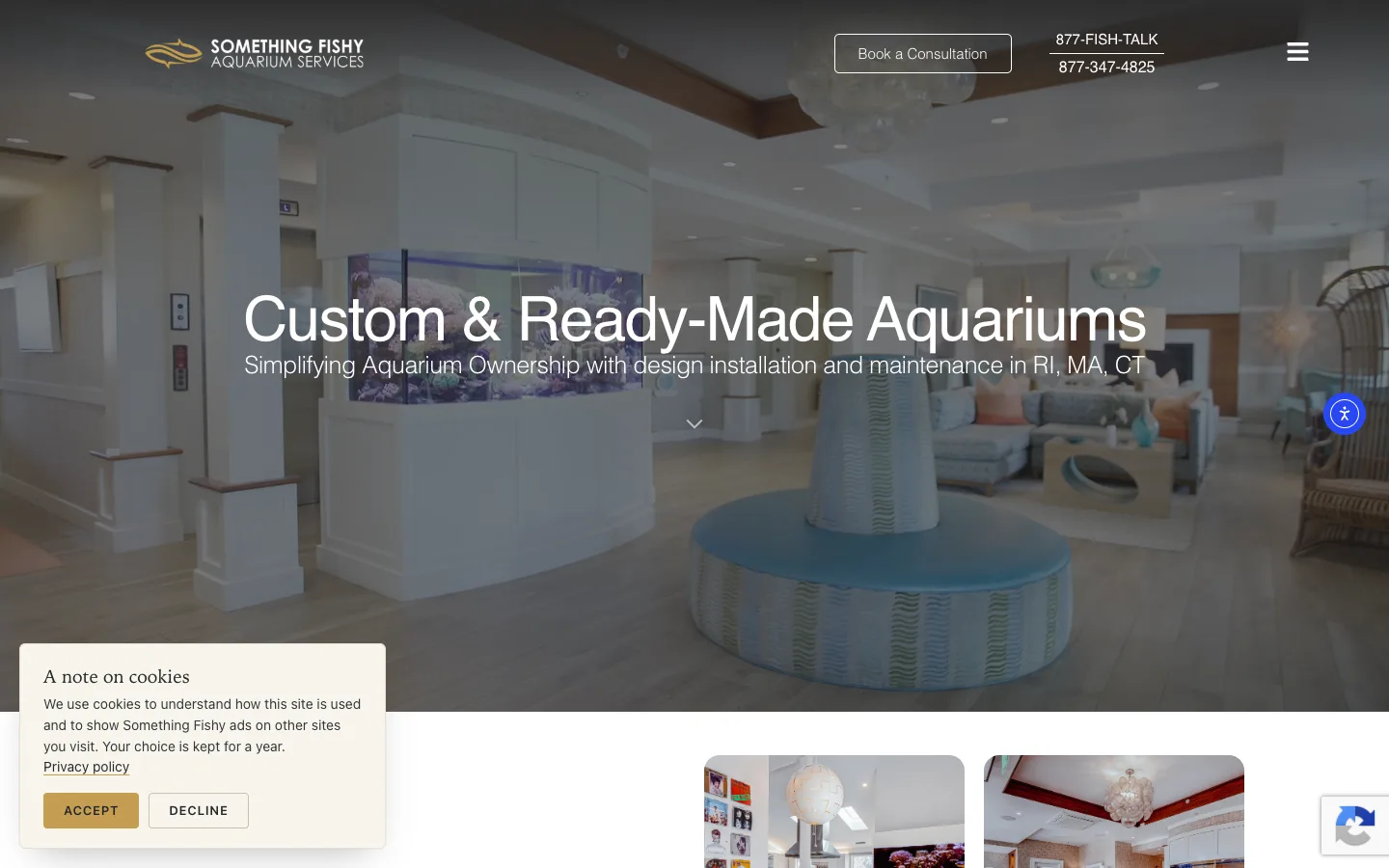
The public work, in Something Fishy's colors.
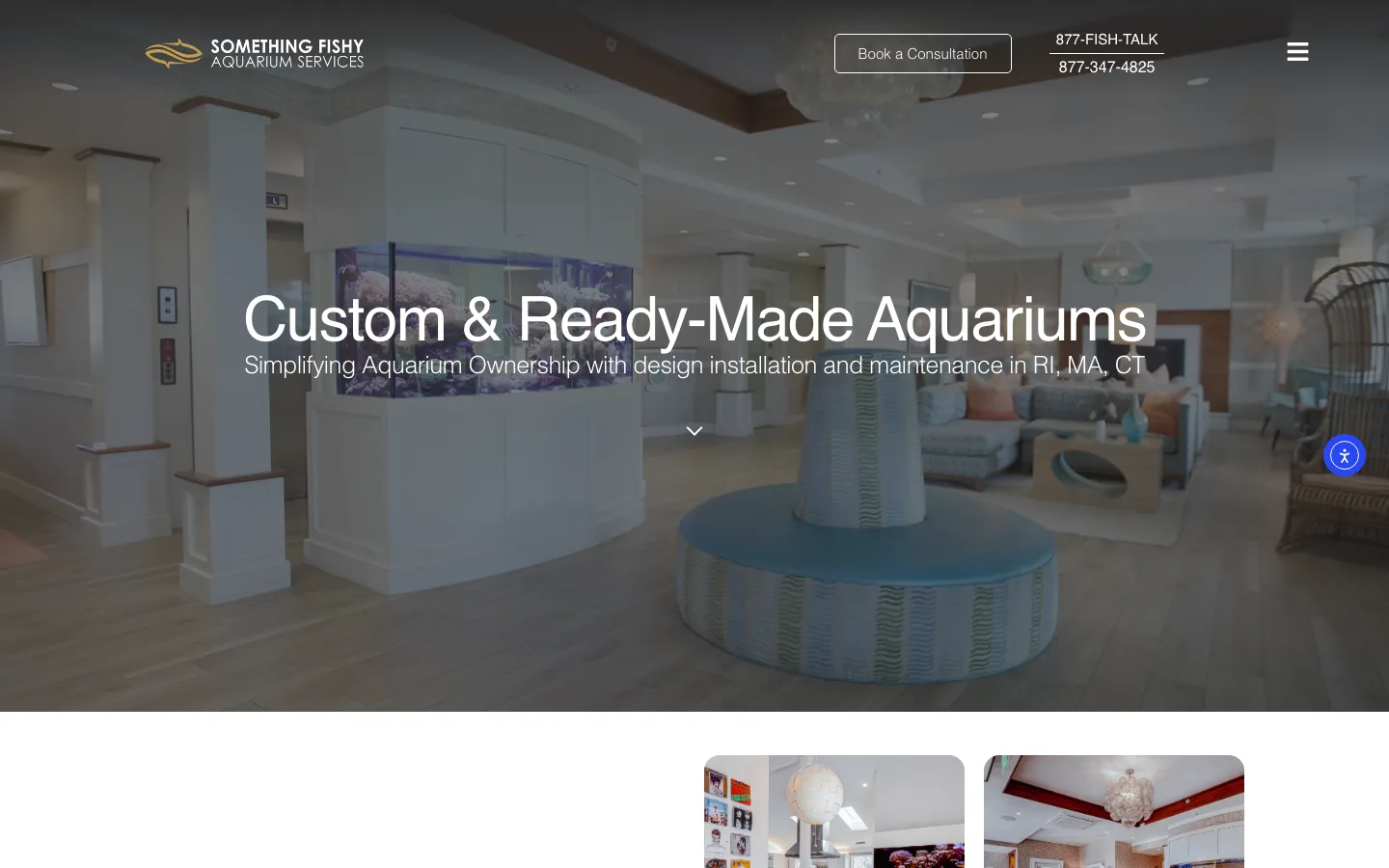
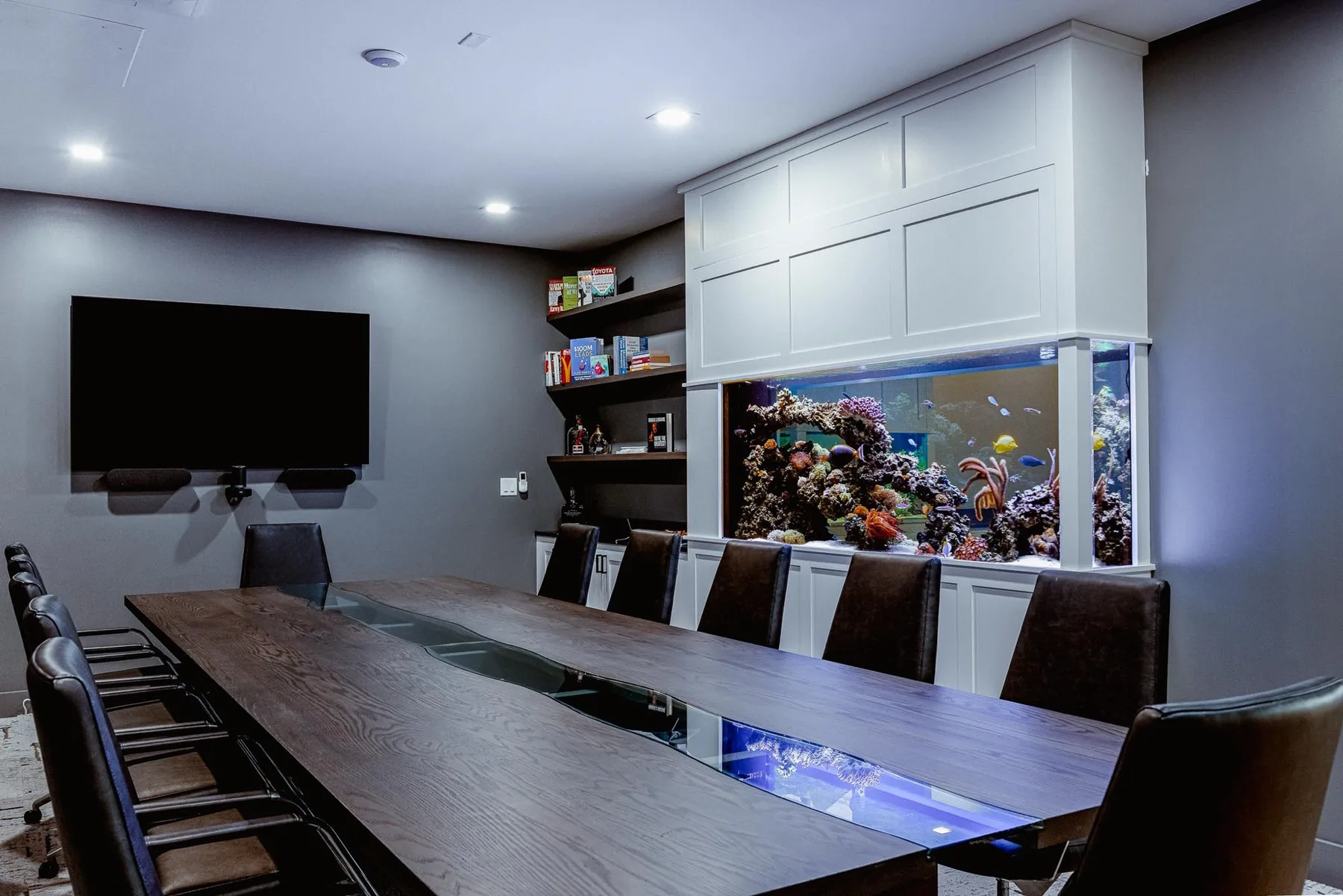
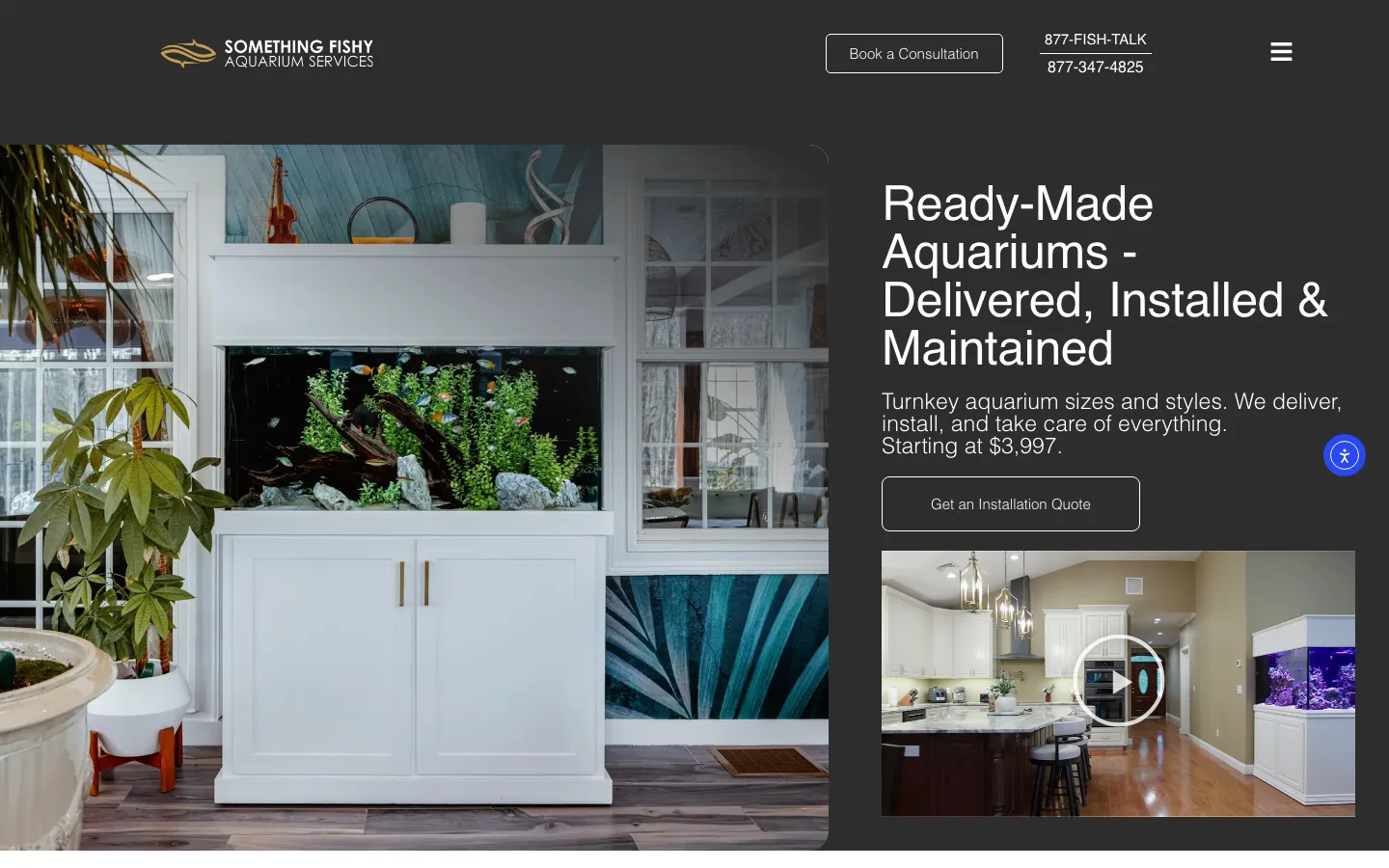
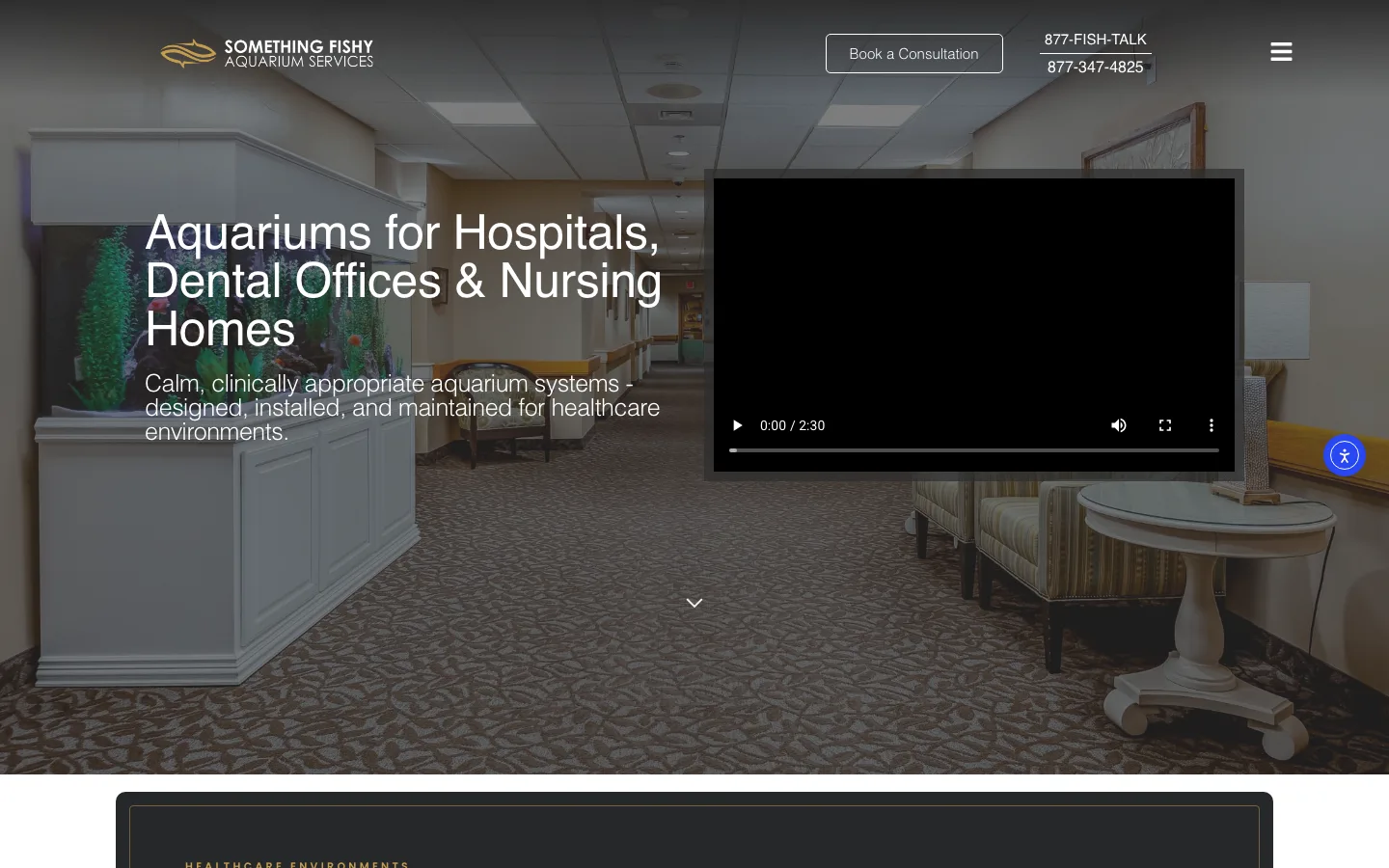

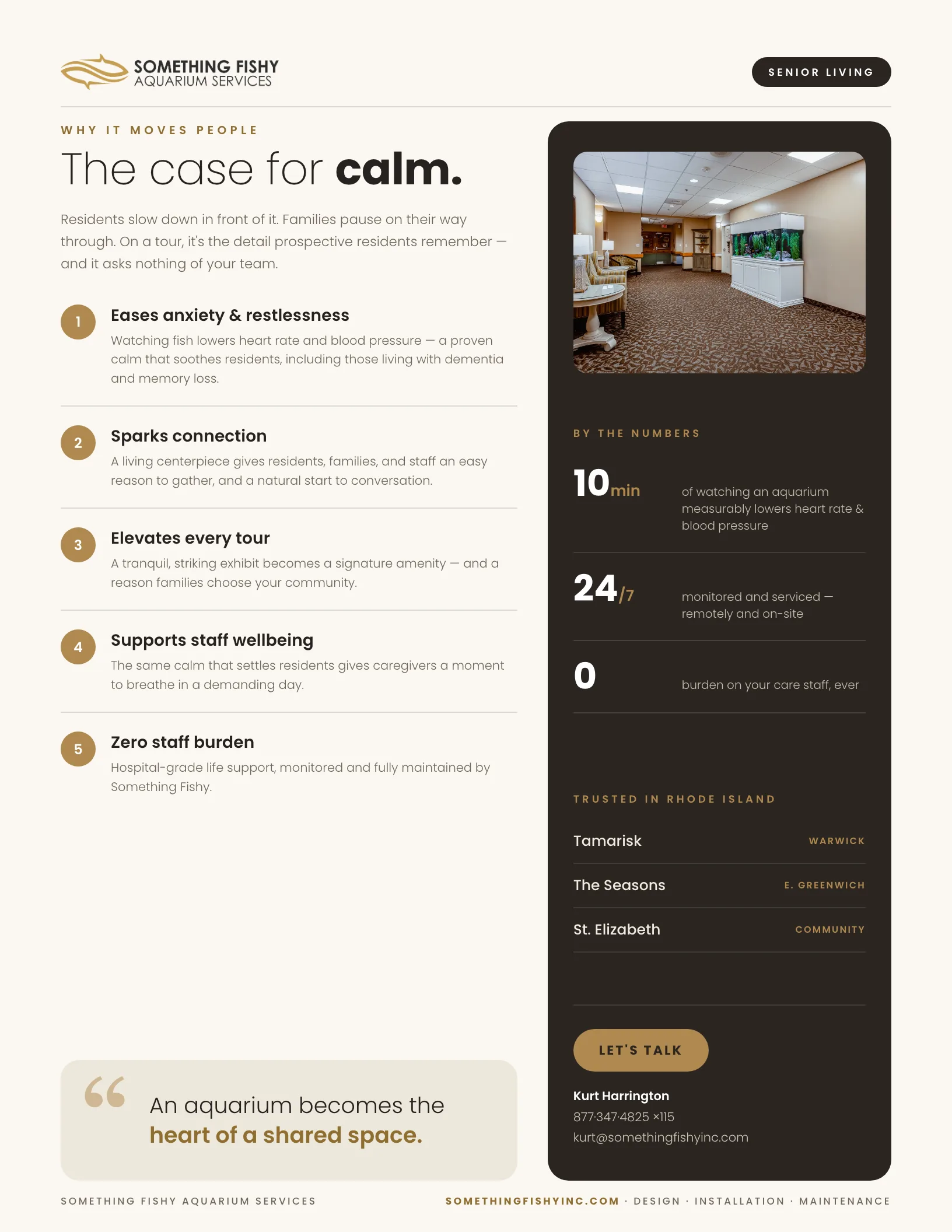

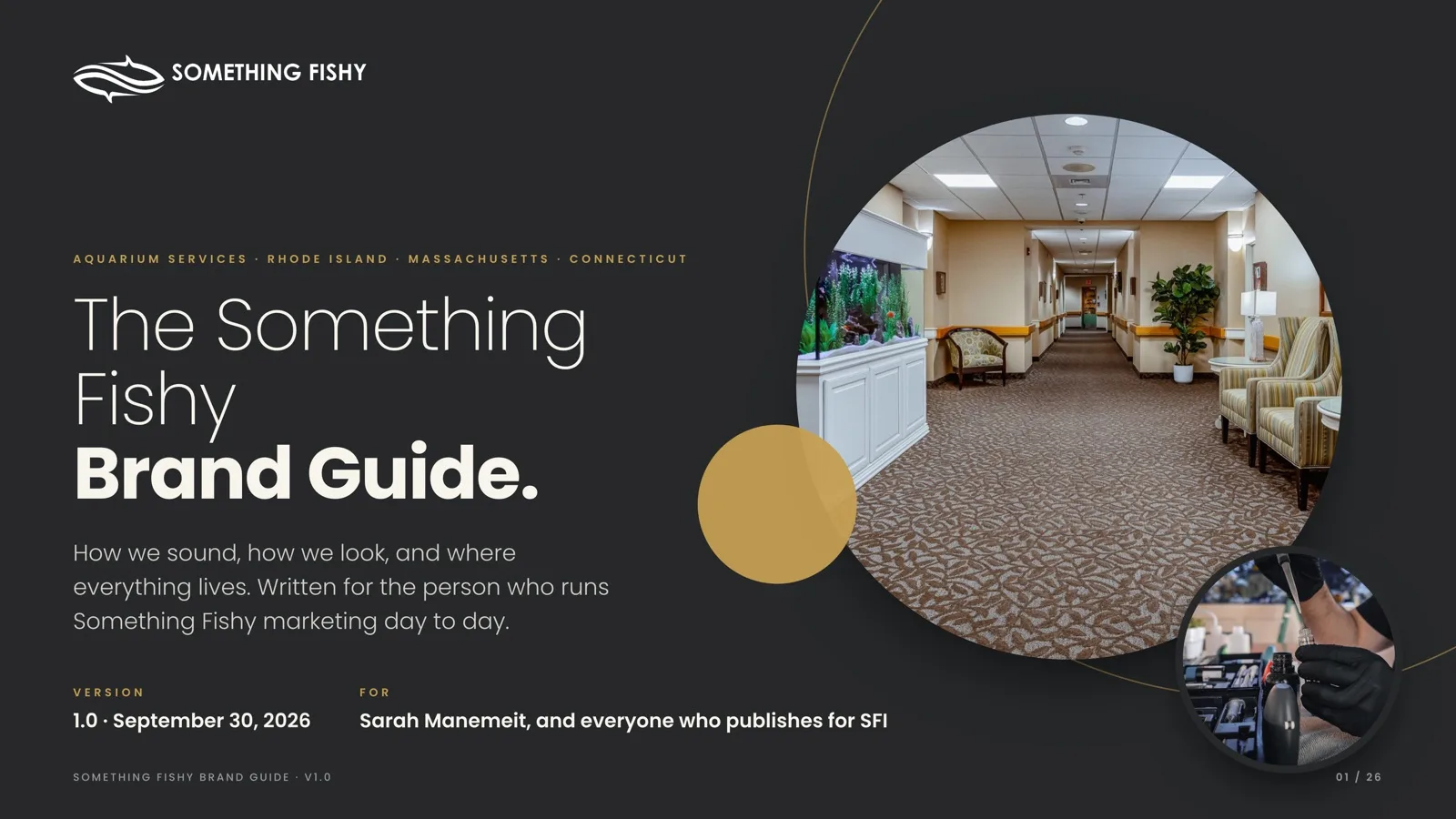
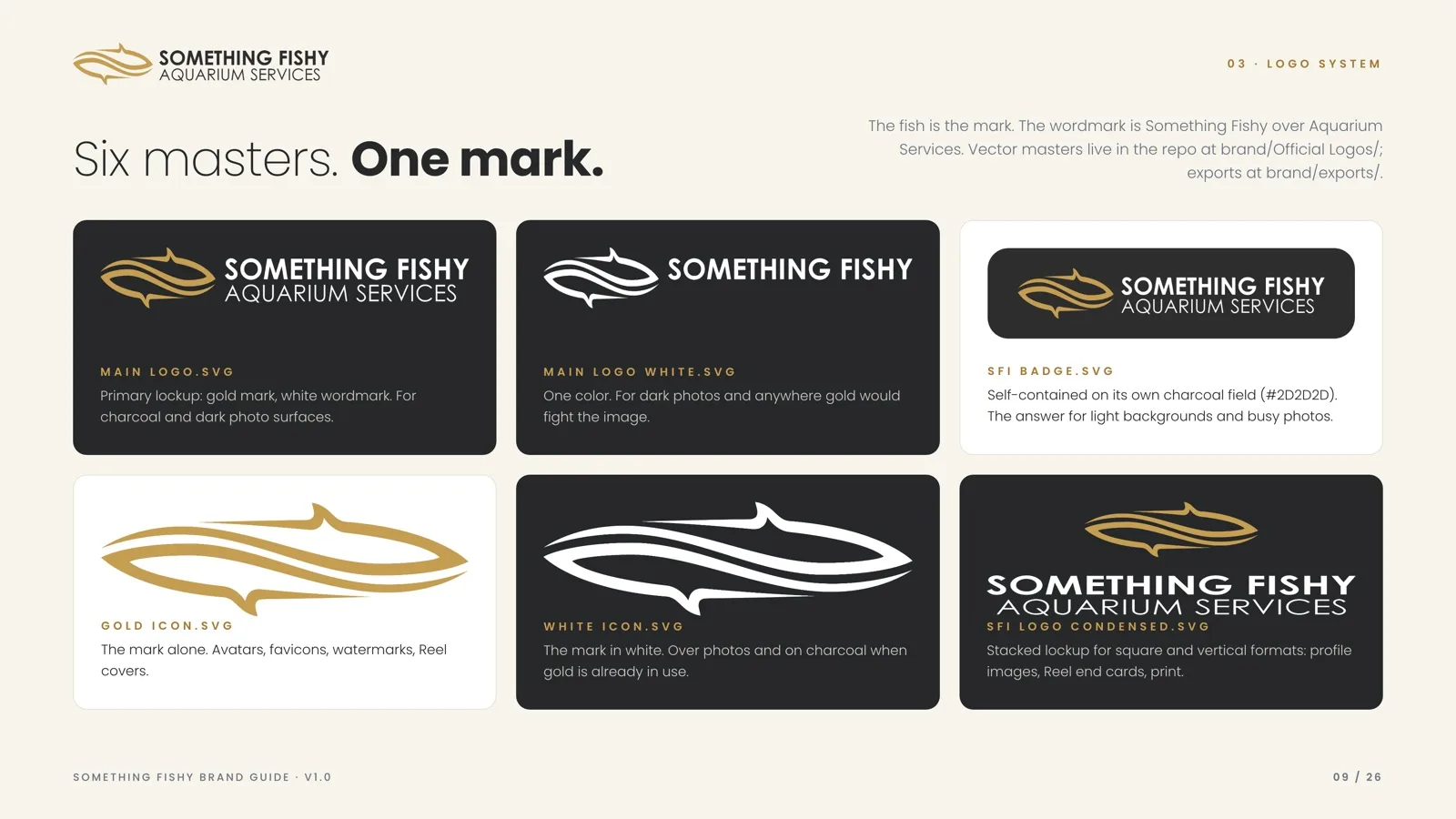
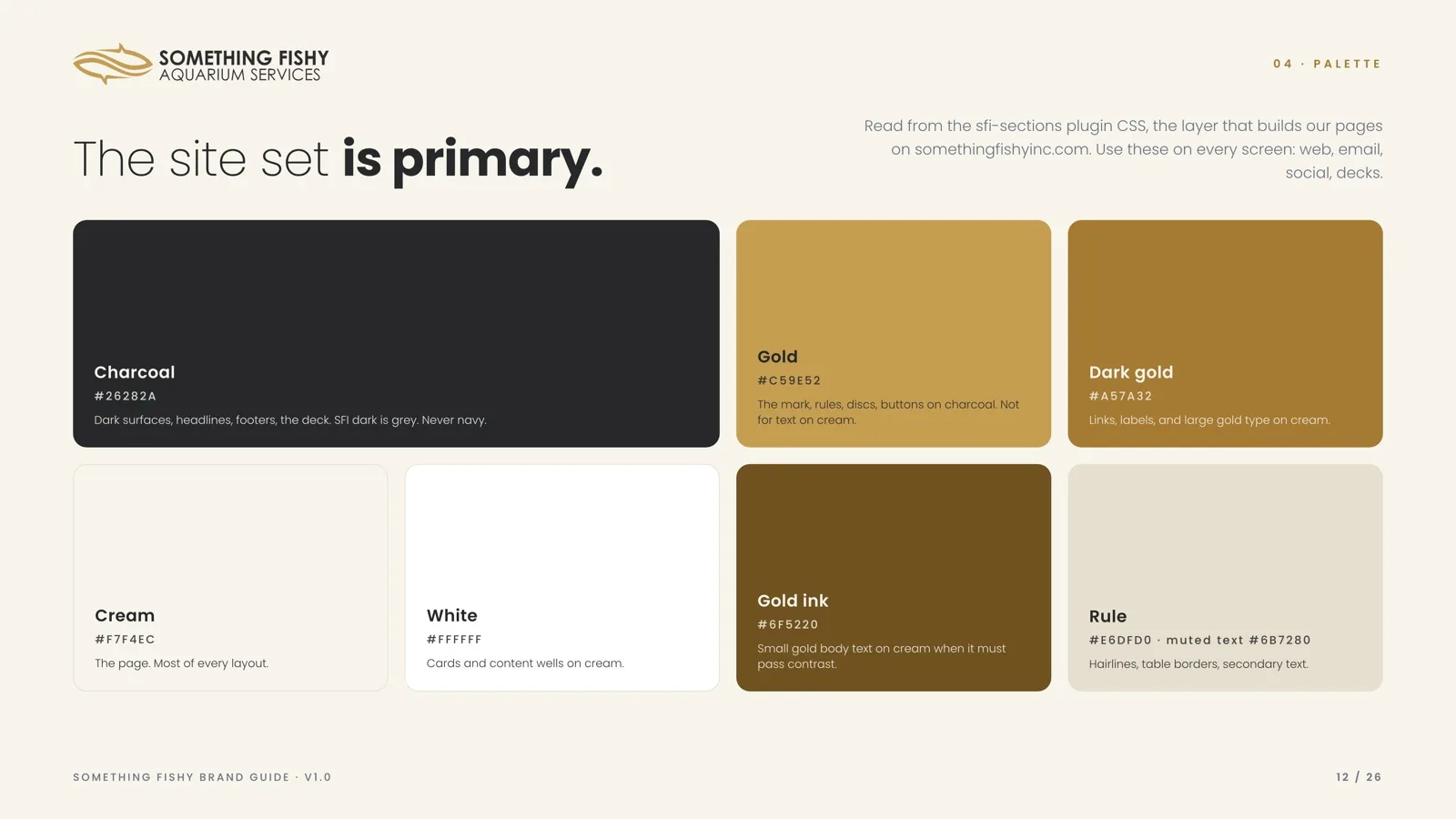
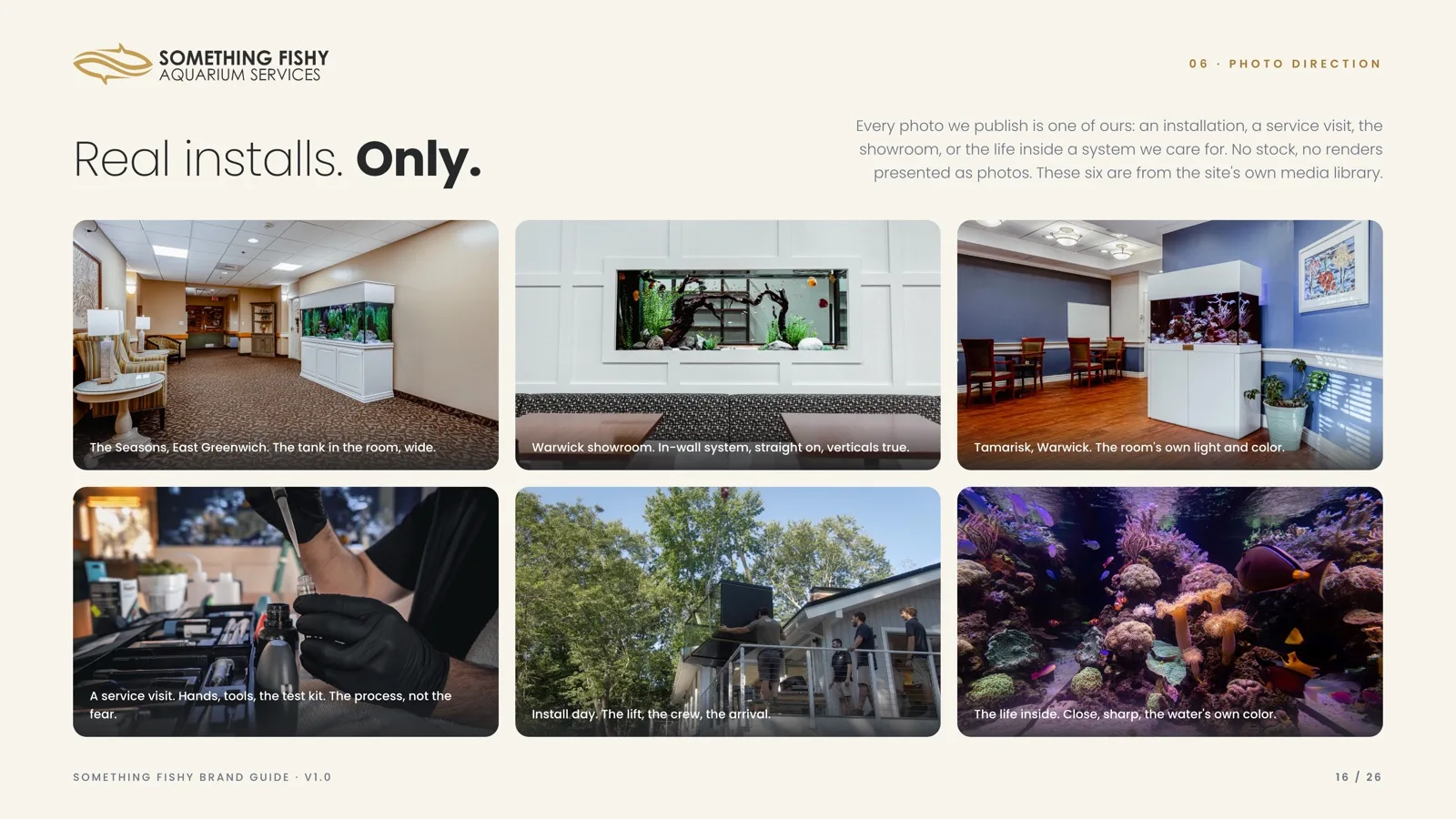

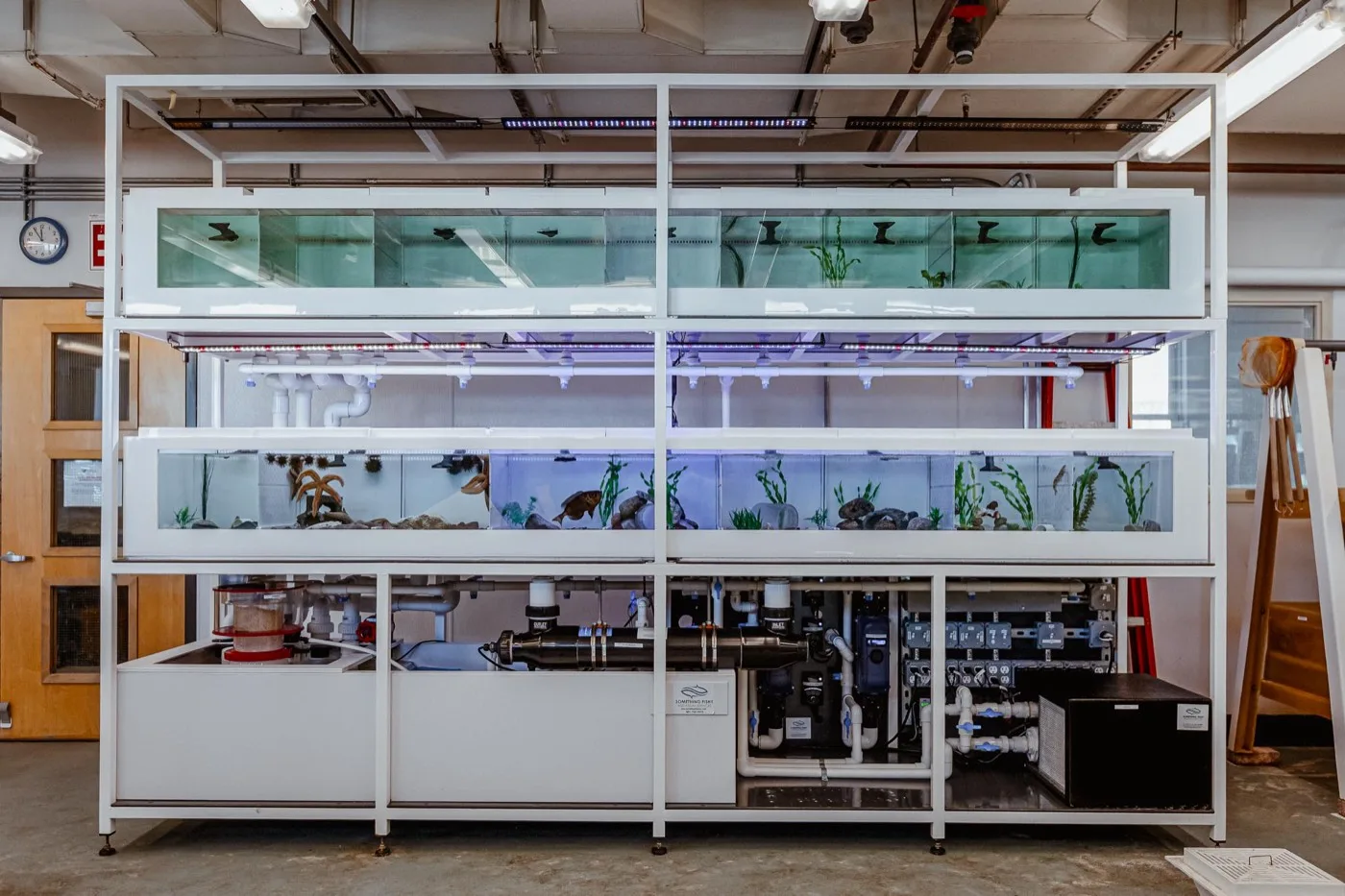
A console leadership reads, and an engine that does the work.
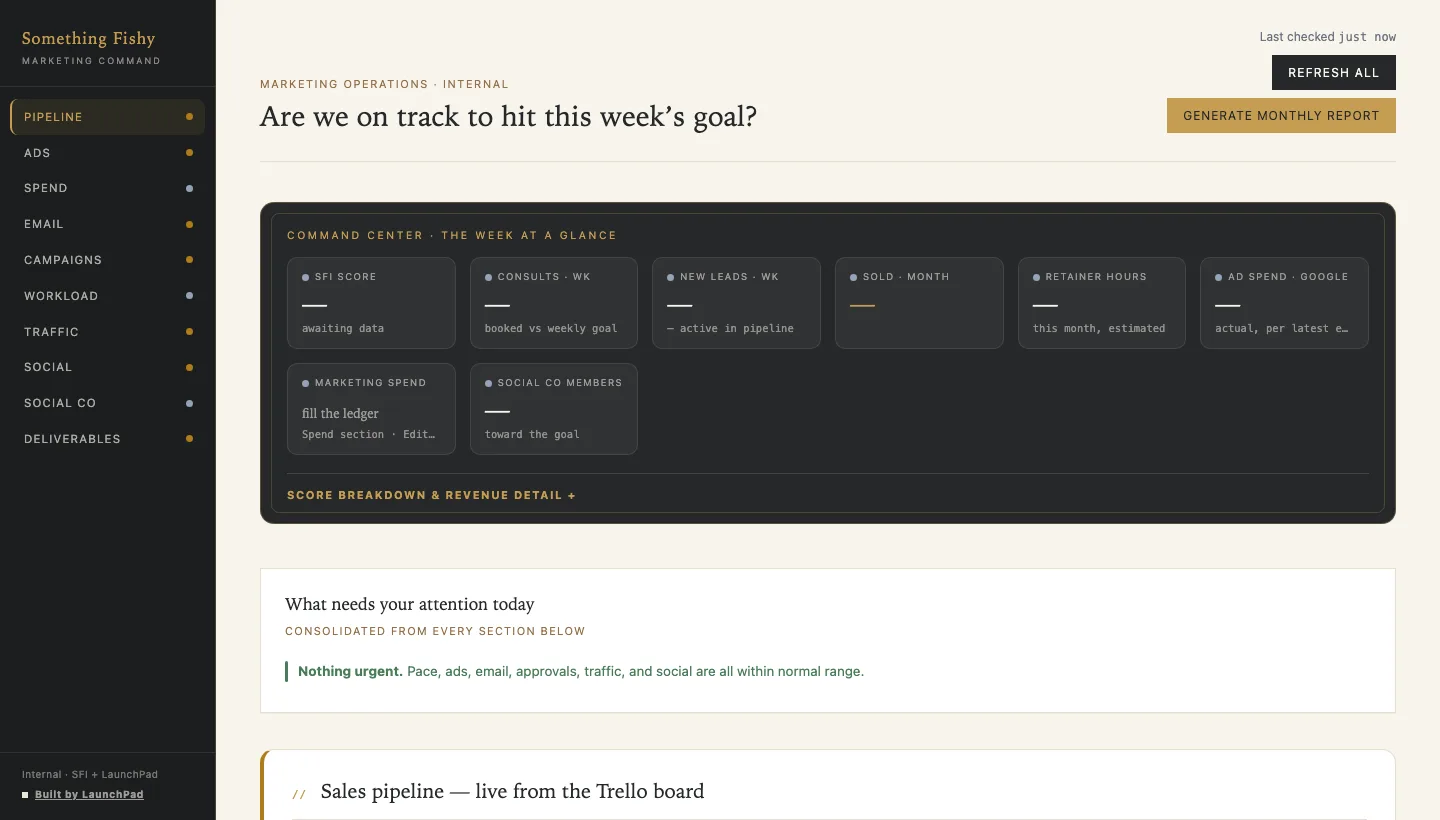
The console
The console is a private, password-protected page on SFI's own domain. It has a section for each question leadership asks: the sales pipeline, read live from the Trello board; ads, with leads and cost per lead; all-in marketing spend; email performance; campaigns and what is in motion; workload by campaign and channel; website traffic; social; and the retainer deliverables, tracked automatically from Asana. Work waiting on a decision can be approved or declined right there, and the answer syncs back to the task board. A weekly score out of 100 rolls up consults against goal, new leads, cost per lead, email opens and the trend in contact-page visits, and a monthly report can be generated from the same numbers.
A review tool that turns a reviewer's highlight into a task
When someone at SFI wants a change on a live page or a draft, they highlight the text and type the edit. It lands as a task on SFI's Asana board with the exact quote, the page element it came from, and a link back to the spot. The tool replaced a pin tool that recorded only a position on the page, which made a note like "remove this" ambiguous. Task status syncs back hourly.
The review tool lives inside the site's editing sessions, so there is no screenshot of it here without a client page in the frame.
Website sections that live in code, not in one-off edits
SFI kept its WordPress site. We added a plugin that holds its branded page sections: the project gallery, the products page, the Ready-Made catalog and store, the healthcare page, the local service-area pages and the cookie banner. They are version-controlled and reusable, and when we change a page by script we keep a backup and a rollback.
On September 29 the cookie banner went live for every visitor. Accept or Decline is remembered for a year, Decline turns off ad and analytics storage for that visitor, and the banner links to the privacy policy. The same week we cleared a server error log that had stopped recording in August, added a daily guard so it cannot fill again, and pointed WordPress's alert email at the coordinator's inbox.
A blog pipeline with the approval built in
Posts are drafted to a brief, checked against the search checklist SFI's search partner wrote (answer first, a real FAQ section, three to five links to permanent pages), and loaded into WordPress as drafts. Each post's preview link sits on its approval task. Nothing goes live until leadership approves. All eight September posts were drafted and loaded by August 7.
A social pipeline that schedules drafts, not posts
Exported video and images go into one folder. A single command transcribes the video, drafts captions to SFI's written voice rules, and prepares them for Metricool. Posts are scheduled as drafts that route to two SFI approvers before anything publishes. Google Business Profile posts run the same way: seven were approved and scheduled two a week through October 12.
Email journeys that start on a tag
SFI's email runs as journeys that begin when a contact receives a tag. That makes the tag the gate: a contact with no tag never gets a journey email. When 339 contacts arrived from SFI's customer database on September 25, we checked them before anything could send. Thirteen were active clients, five were professional alliance contacts, and the other 321 were vendors, insurers, banks and similar contacts who should never enter a nurture journey. Nothing was emailed to anyone.
Lead routing from every website form
Each lead form on the site saves the submission, emails a mailbox, and fires a webhook that creates the Trello lead card and tags the contact in Mailchimp. While auditing the forms on September 29 we found the maintenance popup only emailed one inbox. It now creates a Trello card like the rest.
How it runs, week to week
Work moves across a single Asana board: New Idea, This Week, Next Week, This Month, Awaiting Approval, Ongoing, Parking Lot, Done. Every deliverable is one card with its link attached. Awaiting Approval is the column leadership has to look at, and the console surfaces the same queue.
Nothing publishes on its own. WordPress posts are saved as drafts, Mailchimp emails are saved as drafts, and social posts are scheduled as drafts that route to SFI's approvers. The working rule on the LaunchPad side is that nothing goes out without an explicit yes.
SFI and LaunchPad meet on Tuesdays. A written recap follows, with what shipped, what was decided, and who owns each next step. The console reads from the same sources the team works in, Trello, Asana, Mailchimp, Metricool, Google Ads and analytics, so nobody retypes numbers into a report. A team we call Mission Control operates the system on LaunchPad's side and answers for it.
Leadership's part is a short list: what is waiting for approval, what shipped, and how the week scored. The design target is about five minutes a week. We have not timed SFI's actual use, so treat that as the goal and not as a result.
The arrangement is changing. Through October, LaunchPad's hours go to transition: SFI's in-house coordinator takes over the week-to-week, and after October LaunchPad supports SFI project by project. The system was built to be handed over, with a written map of where every account, plugin and workflow lives.
It is not finished. As of late September the traffic and social panels of the console were being repaired.
What we can show, and what we have not measured yet.
These are the changes we can source. Each line notes where the number comes from.
| Measure | Before | After | Where it comes from |
|---|---|---|---|
| Weekly social content production | About 45 minutes or more, six manual steps | One command, under 10 minutes | Our own estimate, stated in the pipeline's documentation. Not an audited measure. |
| Mobile performance score, Ready-Made page | 57 | 70 and 81 across two runs | Local Lighthouse with simulated throttling, August 19, 2026. |
| Mobile largest contentful paint, same page | 17.3 seconds | 4.3 and 3.3 seconds across two runs | Same test. Lower is faster. |
| Mobile page weight, same page | 4.4 MB | 2.9 MB | Same test. |
| Hero video file size, same page | 58 MB | 6.1 MB | Re-encoded August 19, 2026; it still loads only on tap. |
| September blog posts | Due August 28 | All eight drafted and loaded by August 7 | Drafts. Publishing waits on SFI's approval. |
Some changes are not numbers. On September 29 the maintenance popup form began creating a Trello card, where before it only emailed one inbox. The cookie banner went live for every visitor. A server error log that stopped recording at 8 GB in August was cleared and now has a daily guard.
What we have not measured: leads, consults or revenue that can be credited to the system. The console tracks consults against a goal, new leads and cost per lead every week, and the monthly report carries them. We will add SFI's before-and-after figures to this page once SFI has approved them for publication.
Questions people ask.
What is a marketing console?
A private page where a business sees its marketing on one screen and decides what goes out. SFI's shows the sales pipeline, ads and cost per lead, total marketing spend, email, campaigns, workload, traffic, social and deliverables, and lets leadership approve or decline work waiting on them.
What is an engine?
The set of tools that does the work behind the console, built around the number the business needs to move. SFI's engine covers blog and search content, social scheduling, email journeys, lead routing and website changes. Another business's engine might be built around outreach or ads instead.
Do we need to replace our website?
No. SFI kept its WordPress and Elementor site. We added plugins to it, including one for reusable page sections and one for review feedback, and made page changes by script with a backup and a rollback each time.
What does it cost?
The price depends on the console and engine a business needs, so we scope it in a strategy session instead of publishing a number here. A build comes first, then a monthly run if you want us to operate it with you.
How long does a build take?
SFI's system grew in layers, not in one delivery. The first script dates from May 20, 2026, the approvals portal went up June 23, the spend ledger and review plugin arrived July 31, and the cookie banner went live September 29. For a new client we give a timeline only after scoping the console and engine in a strategy session.
Does anything publish without our approval, and is AI involved?
Nothing publishes without the client's yes. Website posts and emails are saved as drafts, and social posts are scheduled as drafts that route to the client's approvers. Captions and blog drafts are written with AI assistance against the client's written voice rules, then edited by a person.
Bring the goal and the tools you use now.
This fits a business in Rhode Island, Massachusetts or Connecticut that has outgrown a few tools and one person's memory. You have a marketing coordinator, or an owner doing it on the side, and an outside specialist or two for ads and search. No one's job is to build the connections between them. You do not need a new website for this. You need the week to run on one screen, with someone operating it behind the scenes.
If this sounds like your week, book a strategy session. Tell us the number that has to move and which tools you run today. We will tell you what we would build around it, and how it would run.